IdentificationHow to recognise hawksbill turtles
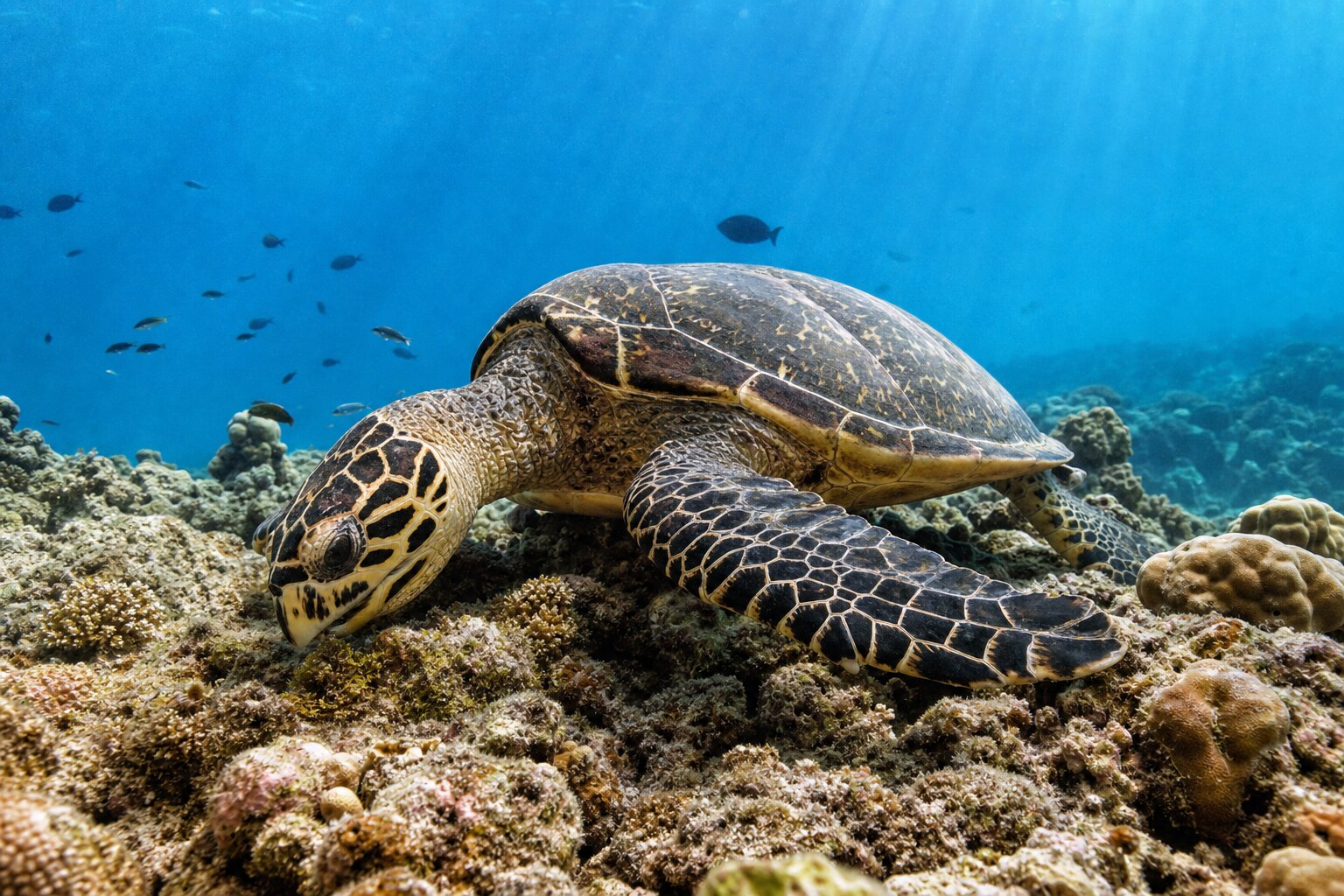
Hawksbills have a narrow pointed beak, overlapping shell scutes and patterned amber-brown flippers. They are generally smaller than green turtles.
- Distinctive pointed beak
- Possible year-round reef encounters
- Calm observation with a clear exit path
Overview & behaviourObserve natural behaviour
They forage among reef crevices, often feeding on sponges, and may rest beneath ledges. Give them a clear path to the surface.
Encounter typesReef feeding · Resting ledge · House reef
Typical conditionsCoral-rich reefs with sponges and sheltered ledges
Give wildlife space and follow your guide
01Never touch, hold, feed or ride a turtle.
02Remain to the side and do not block its route to the surface.
03Avoid crowding a feeding or resting animal for photographs.
Conservation status
Critically Endangered — IUCN Red List; threats include illegal trade, entanglement, marine debris and habitat loss.
Our conservation approach