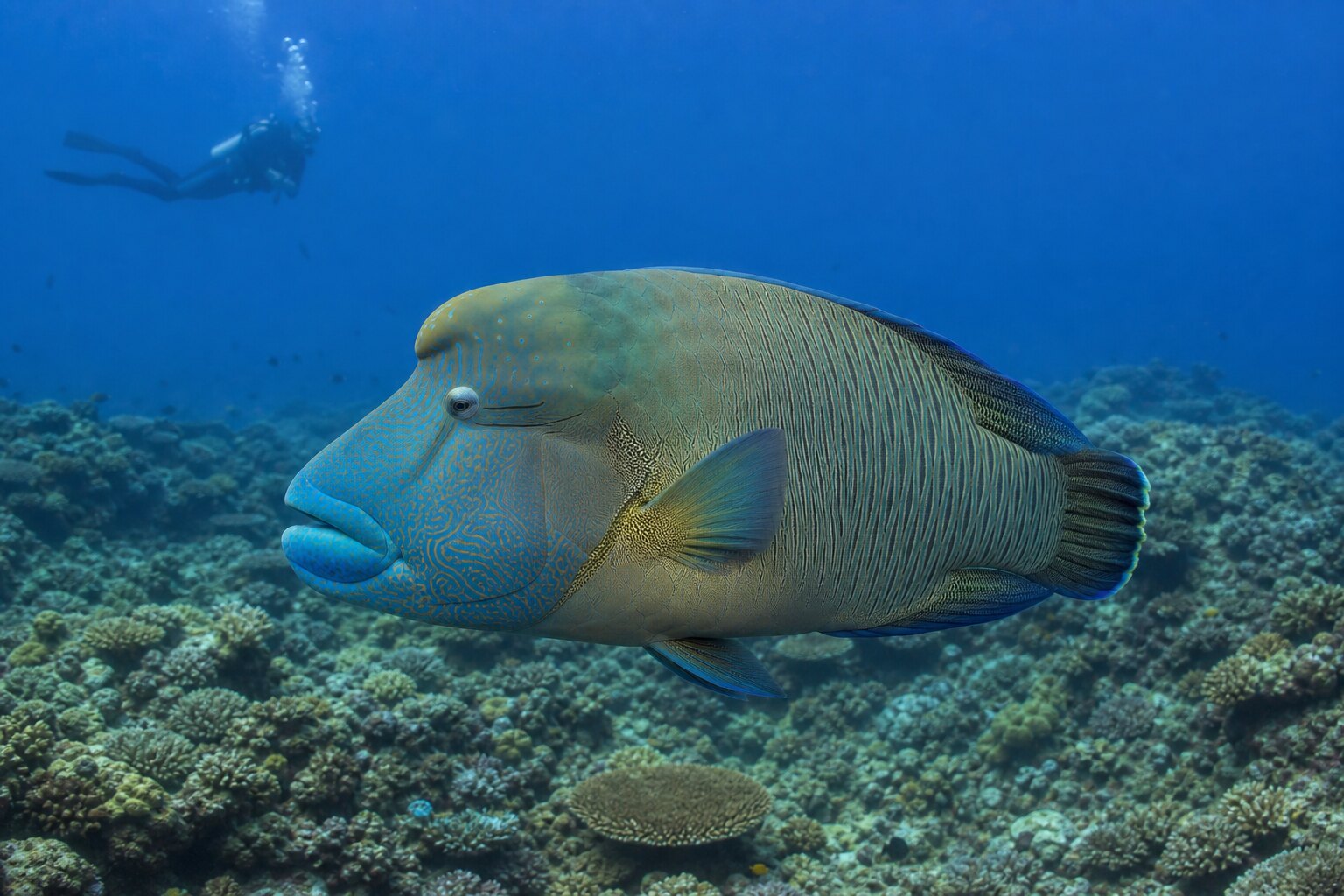
IdentificationHow to recognise napoleon wrasse
Adults have a prominent forehead hump, thick lips and blue-green maze-like markings. Large males can exceed one metre.
- One of the largest reef fishes
- Distinctive forehead and facial markings
- Healthy reef habitat matters
Overview & behaviourObserve natural behaviour
Napoleon wrasse patrol broad reef territories and may visit cleaning stations. Familiar individuals can appear curious but should never be fed.
Encounter typesReef patrol · Channel corner · Cleaning station
Typical conditionsHealthy coral slopes, reef edges and deeper ledges
Give wildlife space and follow your guide
01Do not feed or lure wrasse toward divers.
02Approach slowly and keep fins and equipment clear of coral.
03Let the fish set distance and direction.
Conservation status
Endangered — IUCN Red List; overfishing and live reef-fish trade are primary threats.
Our conservation approach