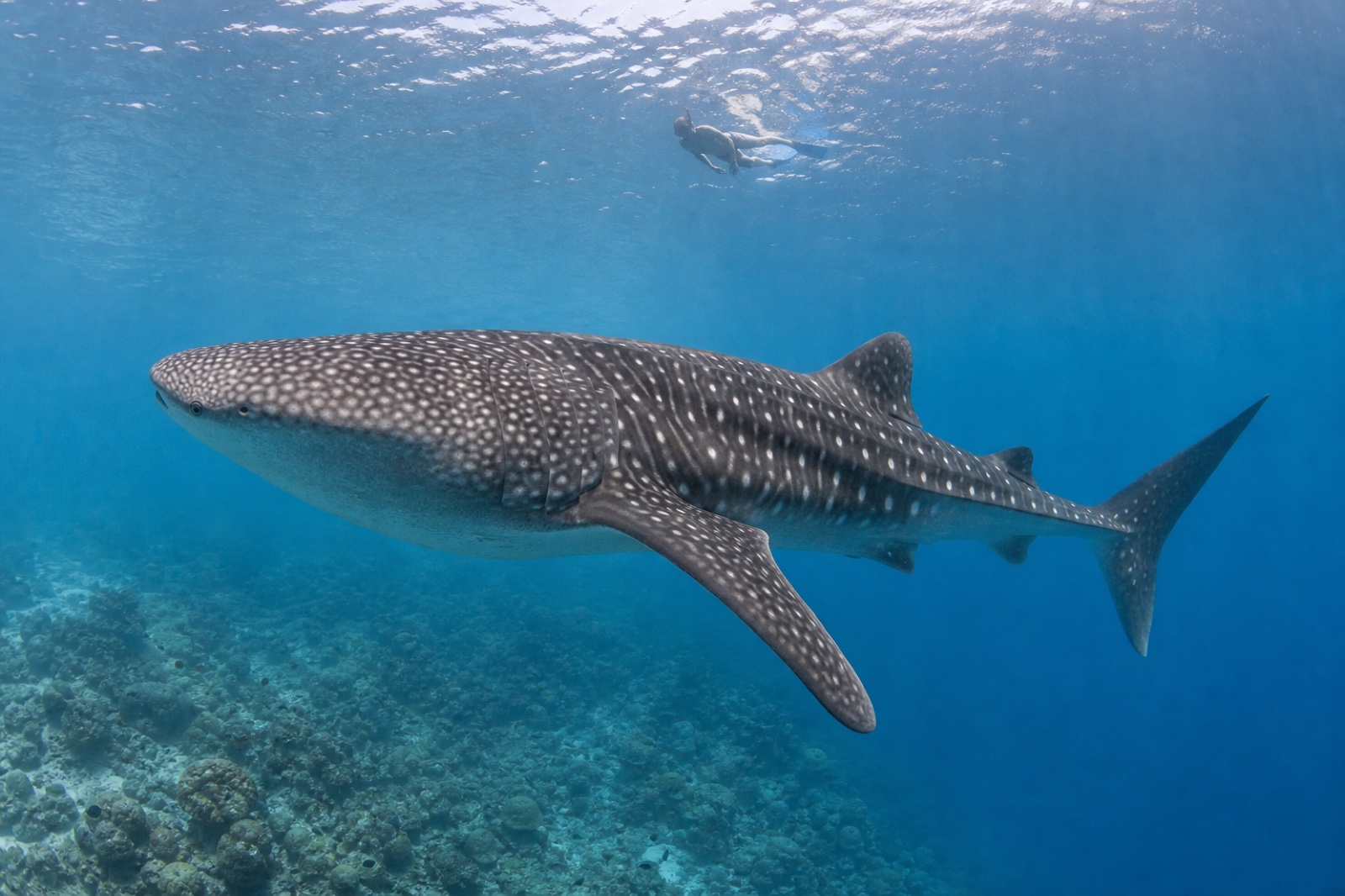
IdentificationHow to recognise whale sharks
The world’s largest fish has a broad flattened head and a unique checkerboard of pale spots and stripes used for photo identification.
- Unique spot pattern on every individual
- Responsible vessel and water entry
- Fallback diving built into the itinerary
Overview & behaviourObserve natural behaviour
Whale sharks filter-feed on plankton and small prey. In South Ari, individuals may travel along outer reefs, but daily sightings remain unpredictable.
Encounter typesOuter-reef transit · Snorkelling · Occasional dive encounter
Typical conditionsOuter reef, warm water and variable surface activity
Give wildlife space and follow your guide
01Enter calmly and never jump onto or in front of an animal.
02Keep the guide-mandated distance from the head and tail.
03Never touch, ride, feed or use flash directly in the animal’s face.
Conservation status
Endangered — IUCN Red List; vessel strikes, fisheries interactions and marine pollution remain major threats.
Our conservation approach